
· by Michael Blair, Nashville's Masonry
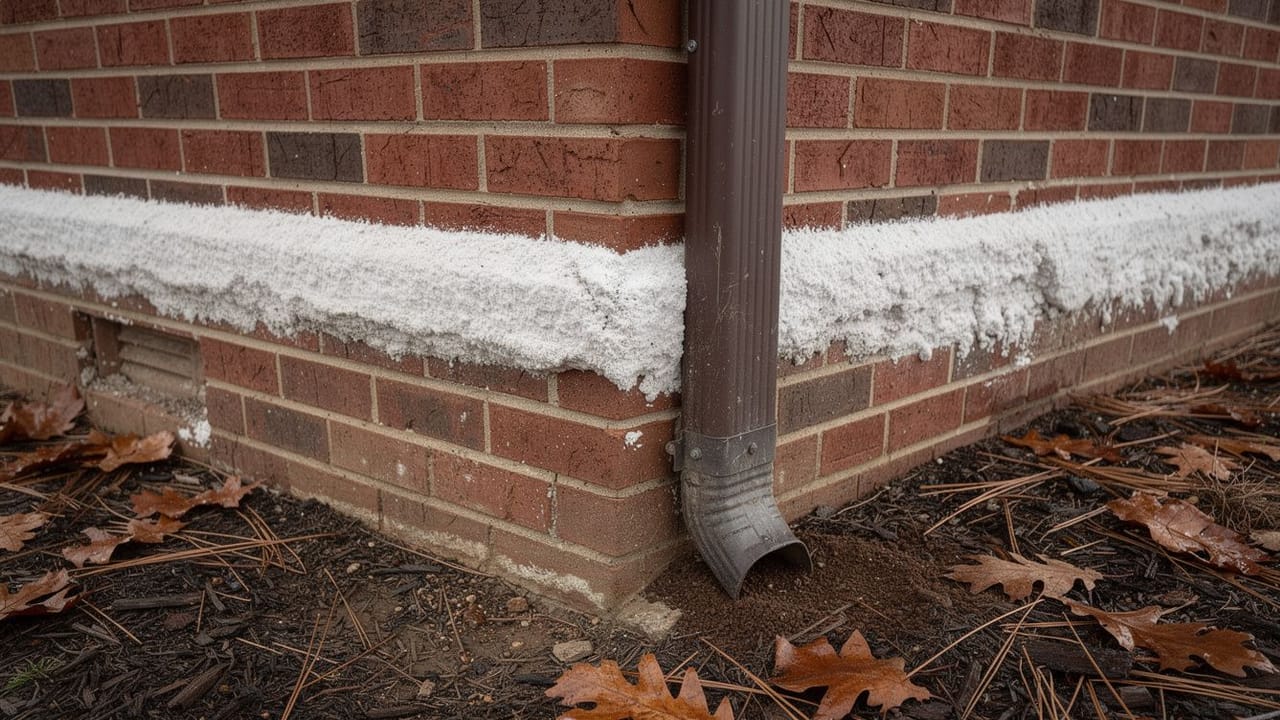
A white haze or crust on brick, block or stone, sometimes in streaks, sometimes in a band along the bottom of a wall, is efflorescence. Water inside the masonry dissolves salts from the brick, the mortar or the ground, carries them to the surface, and leaves them behind when it evaporates, the whitish powder described in the National Park Service’s brief on cleaning masonry. On a new wall it is common and usually goes away on its own. On an old wall, appearing in one place year after year, it is a map of where water is getting in, and that is the part worth reading.
Where do the salts in efflorescence come from?
New masonry has soluble salts in the mortar and often in the brick, and plenty of water left over from construction. The Brick Industry Association’s technical note on efflorescence, BIA for short, calls the bloom on brickwork less than a year old new building bloom, puts it down to that water evaporating, and says that in most cases it dissipates once the wall is allowed to dry. It tends to show as a fairly even haze across the whole wall. The same note says bloom that comes back after that first year is likely water getting into the wall and staying there.
On older masonry the salts come from the ground, from a leaking gutter, from rain getting into the top of the wall past a failed cap or flashing, or from deicing salt, which the Park Service’s cleaning brief says can dissolve and migrate into the masonry when it is used near a building. The water is the thing. Efflorescence needs a path for water into the masonry and a surface for it to evaporate from, and where you see it, both exist.
What does a white band at the bottom of a wall mean?
A band along the bottom of a wall is usually rising damp. The Park Service’s brief on controlling moisture describes a whitish horizontal tide mark about one to three feet above grade, where ground water drawn up through the masonry evaporates, and says the band is full of salts pulled from the ground along with it. The soil stays wet there because a downspout empties at the base, the grade slopes toward the wall, or rain splashes back onto the lowest courses. Higher up, a streak below a windowsill can point to water getting in at the sill joint, and a patch at the top of a chimney or parapet can point to a failed cap or crown, so those are the first places we look. White deposits on the inside of a basement block wall usually mean water is coming through from outside; the same brief notes that when the soil at the base of a house stays saturated, moisture finds its way through cracks in the foundation walls and into basements.
Efflorescence on a wall that has been coated with a film-forming sealer is the case we take most seriously. The BIA note explains that the coating stops salt-laden water about 1/8 to 1/4 inch below the surface, where it evaporates and leaves the salts inside the brick, out of reach of a brush. The Park Service’s brief on repointing says salt crystallizing within a masonry unit creates pressure that can spall or delaminate the outer surface. More sealer is not the answer; the water source comes first, and whether the old coating should come off is a decision we make wall by wall. Our post on sealing brick goes into why it so often goes wrong, and the one on spalling covers what happens to the face.
- Bottom of wall: ground water and drainage at the base
- Under sills and at joints: often failed sealant or flashing
- Top of chimney or wall: check the cap, crown or coping
- Under a sealer: trapped salts damaging the face
How do you clean efflorescence off brick?
Start dry. The BIA note says efflorescence that weathering does not take away can usually be removed by dry brushing, and the Park Service’s cleaning brief calls for natural or synthetic bristle brushes, never metal, which can abrade the surface and leave particles that stain the masonry. If it returns, wait for warm, dry weather and brush again; BIA advises against washing it off at any other time, because the extra water can bring more salts to the surface. For heavy or stubborn deposits it points to specialty cleaners made for brickwork. Acid is where we slow down: the same note lists the improper use of hydrochloric acid among the sources of the salts themselves, and the Park Service warns that cleaning can draw salts up and leave a fresh bloom that needs a second treatment. Any chemical cleaner goes on a wall that has been wetted first and is kept wet while it works, then rinsed off, and both sources say to test it on a small, inconspicuous area before doing the whole wall. The Park Service warns that acid cleaners can etch and dissolve limestone and marble, and its brief on cast stone says cast stone made with marble or limestone aggregate may be cleaned the way limestone is, with an alkaline prewash and an acid afterwash, while cast stone without those aggregates can take the acid cleaners used on granite and sandstone. The other ways homeowners hurt brick while cleaning it are in our post on cleaning mistakes.
Do not pressure wash it. The moisture brief warns that high-pressure washing can force water into construction joints, where it can dislodge mortar and saturate the masonry, and more water in the wall means more salt on its way out. Where the cleaning brief does use water, it starts at a very low pressure and goes no higher than about 300 to 400 psi.
Stopping it
Cleaning is temporary until the water source is closed. BIA calls building practices that resist water penetration the most effective way to prevent efflorescence, and the Park Service’s moisture brief reads a lot like our own work orders: extend the downspouts away from the foundation, regrade, caulk or repoint around windows and doors, and repoint open joints with a properly formulated mortar. On a chimney that means rebuilding a failed crown, and on a wall with open joints it means repointing them. Once water stops moving through the masonry, the salts stop arriving, and a final cleaning has a real chance of lasting. On a basement wall the fix is on the outside, starting with drainage and grading; the moisture brief puts excavation, dampproof coatings and footing drains after those simpler steps, for the cases where they are not enough.
Once the wall is dry and clean, and only after the water source is fixed, a breathable penetrating water repellent rather than a film-forming sealer can reduce the water the face takes in from rain while still letting the wall dry outward. Even that calls for caution. BIA says coatings are not recommended as the only treatment for efflorescence, and that coating a wall without stopping what causes it may lead to the masonry breaking down. The Park Service’s cleaning brief adds that if water is getting in from the ground or from inside, a coating can intensify the damage because the water cannot escape, and it does not recommend water repellents on historic masonry without a specific need. If you have a bloom that keeps coming back in the same place, ask us to come and read it before anything goes on the wall.
Sources
- National Park Service, Preservation Brief 1: Assessing Cleaning and Water-Repellent Treatments for Historic Masonry Buildings — Efflorescence as a whitish powder left by evaporating water; deicing salts migrating into masonry; no metal brushes; pre-wetting for chemical cleaners; testing on an inconspicuous spot; acid etches limestone and marble; cleaning can draw salts out; low pressure of 300 to 400 psi; coatings can intensify damage when water enters from the ground or inside; repellents not recommended on historic masonry without a specific need
- National Park Service, Preservation Brief 39: Holding the Line, Controlling Unwanted Moisture in Historic Buildings — Tide mark of efflorescence about 1 to 3 feet above grade; downspouts, grading and splash-back; water entering basements through foundation cracks; high-pressure washing forcing water into joints; repairs at openings, joints and downspouts; footing drains and dampproofing after simpler drainage steps
- National Park Service, Preservation Brief 2: Repointing Mortar Joints in Historic Masonry Buildings — Surface salts usually relatively harmless; salt crystallizing within a masonry unit can spall or delaminate the face
- National Park Service, Preservation Brief 42: The Maintenance, Repair and Replacement of Historic Cast Stone — Cast stone with marble or limestone aggregate may be cleaned with the alkaline prewash and acid afterwash used on limestone; without them, acid cleaners may be used
- Brick Industry Association, Technical Note 23A: Efflorescence, Causes and Prevention (2019) — New building bloom in the first year and its fading as the wall dries; recurring bloom means water entering the wall; salts left behind a coating 1/8 to 1/4 inch deep; dry brushing; washing only in warm, dry weather; specialty cleaners; hydrochloric acid as a salt source; test first; coatings not a sole treatment; water-resistant construction as the best prevention
FAQ
The White Stains on Your Brick and What They Mean — questions
Is efflorescence a sign of a serious problem?
On new masonry in its first year, usually not; it is the wall drying out, and in most cases it fades on its own. On older masonry, it means water is moving through the wall, and the location tells you where. Persistent efflorescence in one spot is a moisture problem to fix, not a stain to clean.
Does efflorescence damage brick?
The deposit on the surface is usually harmless. The water that carries it is the problem over time, and salts that crystallize inside the brick, beneath a coating or a dense surface, can spall the face. Repeated efflorescence in one place is a reason to find the water source before the brick is damaged.
How do I remove white stains from brick?
Brush it off dry with a stiff natural or synthetic bristle brush, never a wire one. If it persists, a specialty cleaner made for brickwork, applied to a pre-wetted wall and rinsed thoroughly, usually removes it. Test a small hidden area first, keep acid off limestone and marble, ask before cleaning cast stone, and never pressure wash it. Then stop the water or it returns.
Why are there white marks on new brickwork?
On brickwork less than a year old, white marks are usually what the Brick Industry Association calls new building bloom: salts carried out as leftover construction water evaporates. It tends to be an even haze across the wall and in most cases fades once the wall dries. Bloom that keeps returning after that first year points to water getting in.