
· by Michael Blair, Nashville's Masonry
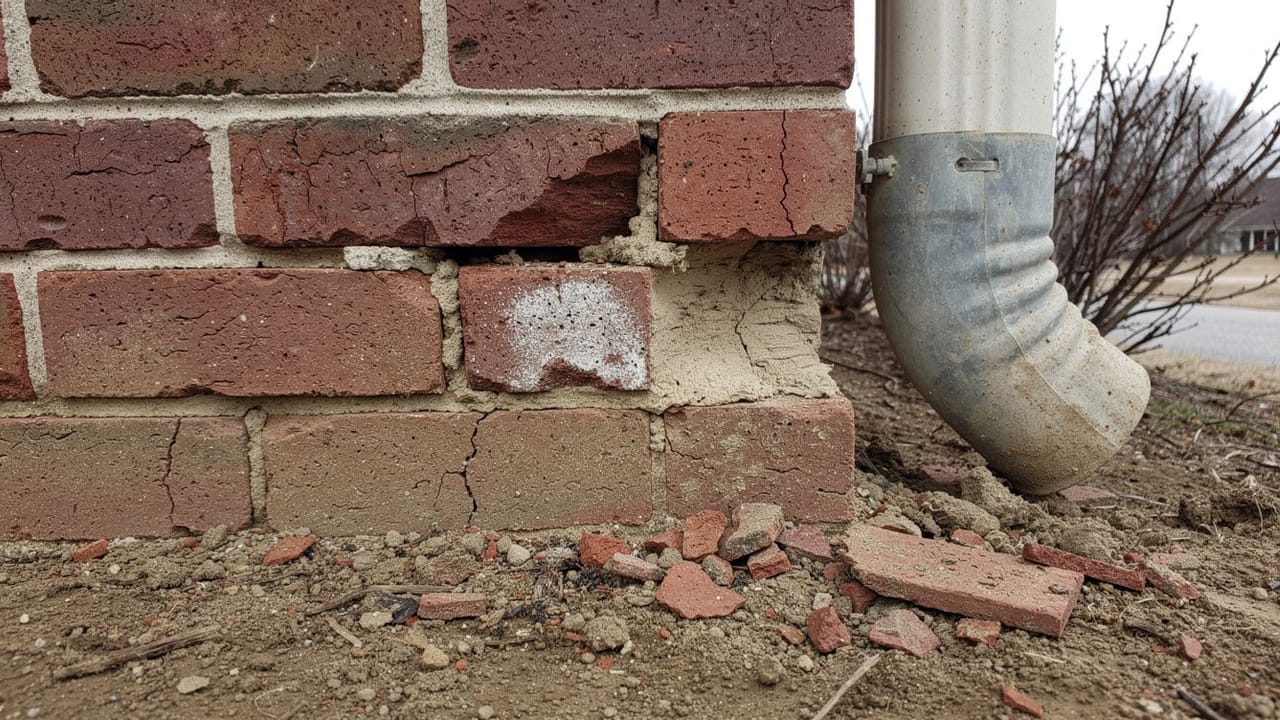
Spalling is the outer layer of a brick breaking off or peeling away in layers, and the National Park Service’s glossary of masonry deterioration notes it is common in brick as well as stone. The same glossary puts it down to two forces acting on moisture trapped under the surface: salts crystallizing and water freezing. Sometimes the wall had help. Preservation Brief 1 on cleaning and water-repellent treatments calls inappropriate cleaning and coatings a major cause of damage to historic masonry.
What makes brick spall?
Water soaked into a brick expands when it freezes, and salts carried in with it crystallize as it dries, which pushes the same way. Preservation Brief 2 on repointing mortar joints describes that salt pressure spalling parts of the outer surface off. The damage comes when the water cannot get back out. Brief 2 says that if the mortar does not let moisture or vapor migrate out of the wall and evaporate, the brick takes the damage, and Brief 1 warns that a water-repellent coating which slows moisture leaving the masonry can lead to spalling too.
That is why we treat one spalled brick as a symptom. The bricks around it sit in the same wall under the same water, so we look at them, and at whatever is wetting them, before we price anything.
What usually causes spalling on a house?
Hard cement repointing on soft brick is the classic one. Brief 2 says repointing mortar should be softer or more permeable than the brick, because a stronger mortar will not give and the stress is relieved through the brick instead, as cracking and spalling. Matching the mortar is where our brick repair and tuckpointing work starts, and our post on why mortar fails before the brick does goes further into the mix.
Then the water sources. Brief 1 says leaking roofs, clogged or deteriorated gutters and downspouts, missing mortar and open joints around doors and windows are almost always behind moisture problems in an old masonry building. Preservation Brief 39 on controlling unwanted moisture lists spalled masonry among the signs to look for, next to flashing and gutters in poor condition, and it singles out lawn irrigation set too close to the house, where badly placed sprinkler heads add a tremendous amount of water at the foundation and on the walls.
Ground contact and the way a wall is treated matter as well. Brief 39 calls below-grade ground moisture a major source of unwanted water in older buildings, and it advises against chloride de-icers near masonry because they can increase freeze-thaw spalling. Brick itself is graded for frost: ASTM C216, the specification for facing brick, classes units as Grade SW or Grade MW by their resistance to freezing damage when saturated. Cleaning can do harm too, since Brief 1 says no cleaning method that uses water should be done when frost is likely; our post on cleaning brick without damaging it covers the rest.
- Mortar harder than the brick
- Coatings that slow the wall drying out
- Leaking gutters and failed flashing
- Sprinkler heads aimed at the wall
- Saturated soil at the base of the wall
- Chloride ice melt on steps and walks
How is spalled brick repaired?
Replacement is the usual repair for a badly spalled brick: the damaged unit is cut out and a matching one set in its place. It is not the only treatment. The glossary lists consolidation, composite patching and replacement with like or compatible material for spalling, and says patching can be quite successful when limited to small cavities, though it was writing about stone. On brick we keep patching to small, shallow areas and replace anything deeper, matching size, color and texture before anything is cut out.
More importantly, the cause has to be removed. Brief 2 makes the point about repointing: without repairs that eliminate the source of the problem, the new work will have been in vain. A new brick set into the same wet corner is no better off than the one it replaced. If you would like us to look at a wall, ask for a free estimate.
Do not seal brick to fix it
Sealing a spalling wall is a well-meant mistake. Brief 1 says a water repellent can hold moisture inside the masonry because liquid water cannot pass through it, and that repellents can be especially damaging on masonry that contains salts, and the glossary ties spalling to salts in the first place.
Where a treatment is genuinely warranted, most repellents today are water-based siloxanes, silanes and related compounds formulated to be vapor permeable, according to Brief 1. Even so, the brief does not recommend one on a historic masonry building without a specific problem to solve, and it says a building kept watertight and in good repair should not need one. Fixing the water source comes first, and our post on sealing brick covers the cases where a repellent earns its place.
Sources
- National Park Service, A Glossary of Historic Masonry Deterioration Problems and Preservation Treatments (1984) — Definition of spalling, common in brick; caused by salts and freeze-thaw under the surface; too hard a mortar; consolidation, patching and replacement as treatments
- National Park Service, Preservation Brief 1: Assessing Cleaning and Water-Repellent Treatments for Historic Masonry Buildings (2000) — Inappropriate cleaning and coatings a major cause of damage; repellents trap liquid water and harm salt-laden masonry; modern siloxane repellents are breathable; not recommended without a specific need; no water cleaning in freezing weather; leaking gutters and open joints behind moisture problems
- National Park Service, Preservation Brief 2: Repointing Mortar Joints in Historic Masonry Buildings (1998) — Salt crystallization spalls the surface; mortar must let moisture out; repointing mortar softer than the brick; fix the source first
- National Park Service, Preservation Brief 39: Holding the Line, Controlling Unwanted Moisture in Historic Buildings (1996) — Spalled masonry as a sign of moisture problems; irrigation too close to the building; ground moisture; chloride de-icers; grading, downspouts and splash-back
- ASTM International, C216-24 Standard Specification for Facing Brick (abstract) — Facing brick graded SW and MW by resistance to freezing damage when saturated
FAQ
When Brick Faces Start Popping Off — questions
Can spalled brick be repaired?
Usually the answer is replacement: a badly spalled brick is cut out and a matching one set in. Small, shallow areas can sometimes be patched by a skilled mason, and the National Park Service lists patching and consolidation among the treatments for spalling. Either way the moisture source has to be found and removed first, or the new work sits in the same conditions as the old.
Should I seal my brick?
Usually not. The National Park Service does not recommend a water repellent on historic masonry without a specific problem to solve, and it warns that repellents can be especially damaging where the masonry holds salts. Moisture in a masonry wall needs a way to move out and evaporate. If there is a specific reason to treat a wall, a breathable water-based siloxane or silane repellent is the product, applied after the water source is fixed.
Why is spalling worse near the ground?
The bottom of a wall gets wet from two directions: ground moisture from the soil below, and rain splashing back off the ground onto the lower courses. Sloping the soil away from the foundation, carrying downspout water well away from the house and cutting down splash-back are the remedies the National Park Service gives. Sprinkler heads aimed at the wall add to the problem.
What is spalling brick?
Spalling is the outer layer of a brick breaking off or peeling away in layers. The National Park Service ties it to moisture trapped under the surface, where water freezes and salts crystallize and push the face off. It shows up in brick as well as stone, and one spalled brick signals water in that wall.