
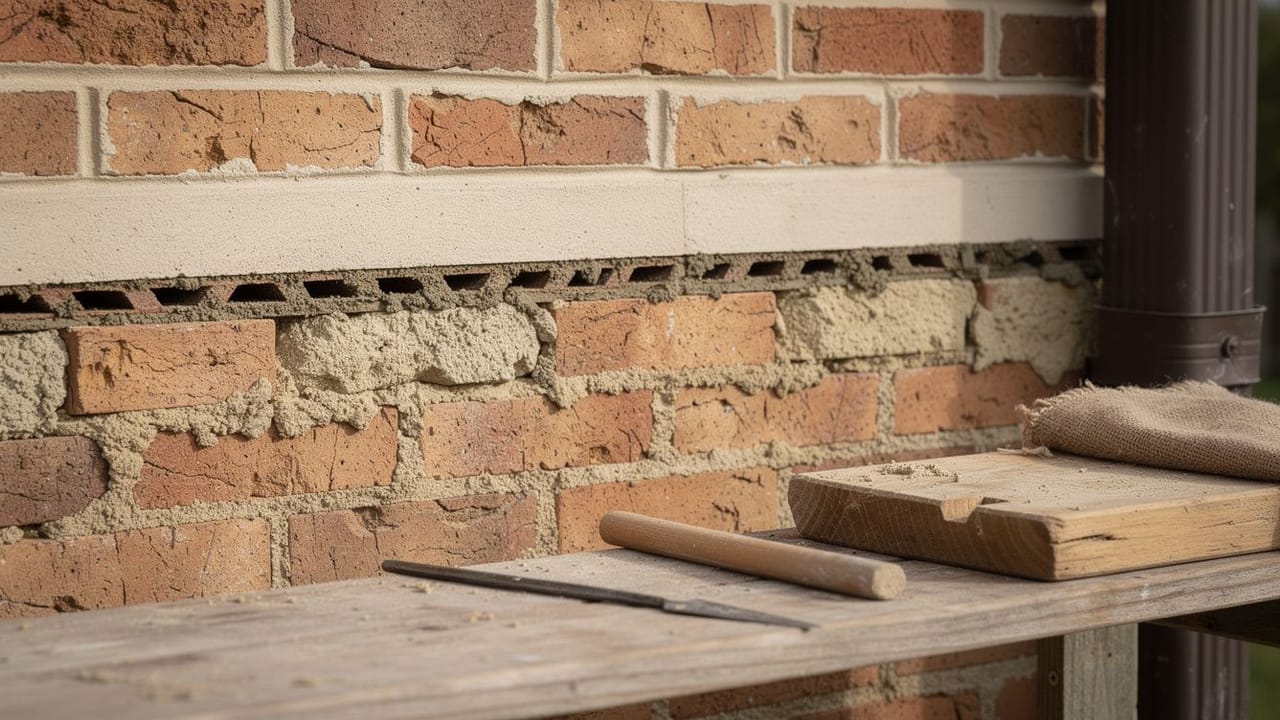
· by Michael Blair, Nashville's Masonry
Mortar is the sacrificial element in a masonry wall. The National Park Service’s Preservation Brief 2 on repointing says mortar joints are intended to be sacrificial, and that new mortar must be softer and more vapor permeable than the brick, so moisture and movement wear out the joint rather than the unit. That principle is what makes the wrong mortar so damaging, and it is the first thing we check when we look at a wall for brick repair and repointing.
Why do mortar joints erode?
Water does most of the work. The Park Service’s Preservation Brief 39 on controlling unwanted moisture calls uncontrolled moisture the most prevalent cause of deterioration in older buildings, and it lists spalled masonry from freeze-thaw action among the results. The same brief advises against chloride de-icers, which can increase freeze-thaw spalling, so the rock salt on the front steps is worth a second thought.
Freezing nights here come in a steady run through the winter. By the count on the National Weather Service’s Nashville climate page, the city’s low drops to 32°F or below on about 67 days in an average year, in a freezing season that runs from a mean first freeze in mid-November to a mean last freeze at the end of March. Joint loss tends to be slow, which is exactly why it gets ignored until it is deep.
The hardness trap
Older, softer historic brick is porous, and so were the lime mortars it was laid in. Brief 2 notes that high-lime mortars are more permeable than denser cement mortars, and that more portland cement in the mix makes a harder mortar. The brief also points out that walls built between 1873 and 1930 can hold anything from pure lime and sand to a wide range of lime, portland cement and sand combinations, so the mix to match is the one actually in the wall.
Repoint soft brick with a hard mix and the moisture that used to leave through the joints is trapped. NPS describes hard portland-cement mortar, less permeable than the soft brick around it, causing severe damage because moisture in the wall could no longer evaporate through the joints, and it calls the cracking and spalling that follows permanent damage that cannot be repaired easily. We cover what that looks like in our post on brick faces popping off.
- Match the mortar to the brick and to what is already in the wall
- Soft historic brick generally wants a lime-rich mix
- Joint profile should match the original
- Rake out to 2 to 2-1/2 times the joint width
- Avoid grinding wider than the joint, which chips the brick edges
What does good repointing look like?
Old mortar raked out to a minimum depth of 2 to 2-1/2 times the joint’s width, which Brief 2 says comes to about 1/2 to 1 inch on most brick joints, so the new mortar has depth to hold. A grinder in the hands of a skilled mason can cut wide horizontal joints, but NPS warns that a careless one damages the brick edges and leaves a wider joint. The new mortar goes back in layers of about 1/4 inch, each packed into the back corners before the next.
The finished joint should match what was there: NPS asks for new mortar that matches the historic mortar in color, texture and tooling, and it notes that filling joints too full changes the character of the original brickwork. New joints take several months to cure fully, and the brief recommends covering the wall with burlap for the first three days.
Where to look first
We start below windows, at the base of walls, under gutters and on whichever side of the house takes the most weather. Nashville gets about 50.51 inches of precipitation in a normal year by the NWS figures, and joints that stay wet longest go first.
When erosion is concentrated in one spot, we look above it before we blame the mortar. Brief 2 says the root cause, whether a leaking roof or gutter, settlement, rising damp or extreme exposure, should always be dealt with before repointing begins, or the repointing will have been a waste of time and money. If a wall of yours is losing its joints, ask us for a free estimate and we will find where the water is getting in before we price the repointing.
Sources
- National Park Service, Preservation Brief 2: Repointing Mortar Joints in Historic Masonry Buildings (Mack and Speweik, 1998) — Mortar joints are sacrificial; new mortar softer and more permeable than the brick; lime vs portland cement permeability and hardness; hard mortar damage cannot be repaired easily; rake-out depth 2 to 2-1/2 times joint width; grinder damage; 1/4-inch layers; matching color, texture and tooling; burlap curing; fix the root cause first; 30 to 100 year life; tuckpointing defined
- National Park Service, Preservation Brief 39: Holding the Line, Controlling Unwanted Moisture in Historic Buildings (Park, 1996) — Uncontrolled moisture the most prevalent cause of deterioration; spalled masonry from freeze-thaw; chloride de-icers increase freeze-thaw spalling
- NOAA National Weather Service Nashville, Nashville climate — About 67 days a year with a minimum at or below 32°F; mean first freeze Nov 11 and last freeze Mar 31; normal annual precipitation 50.51 inches
FAQ
Why Mortar Fails Before the Brick Does — questions
Can I repoint brick with standard bagged mortar?
It depends on the brick. National Park Service guidance is that repointing mortar should be softer or more permeable than the brick and no harder than the mortar already in the wall. On soft historic brick, a hard portland-heavy mix traps moisture and can lead to cracking and spalling that cannot be repaired easily. Older, softer brick generally wants a lime-rich mix matched to the original, and on any wall the mortar already there is the guide.
How often does brick need repointing?
A well-executed repointing job should last at least 30 years, and the National Park Service says preferably 50 to 100. The signs that it is due are disintegrating mortar, cracks in the joints, loose bricks and damp walls. Erosion concentrated in one place often points to a water source above it, and that needs fixing before the joints are redone.
Is tuckpointing the same as repointing?
In everyday use the two words are used interchangeably to mean replacing eroded mortar. Strictly, the National Park Service describes tuckpointing as a mainly decorative raised joint of mortar or lime putty applied on top of flush mortar joints. What most homeowners need, and are quoted for, is repointing.
How do you repoint brick?
Rake the old mortar out to 2 to 2-1/2 times the joint’s width, about 1/2 to 1 inch on most brick, without widening joints or chipping edges. Pack new mortar matched to the old back in layers of about 1/4 inch, tool it to the original profile, and keep the wall under burlap for three days.