
· by Michael Blair, Nashville's Masonry
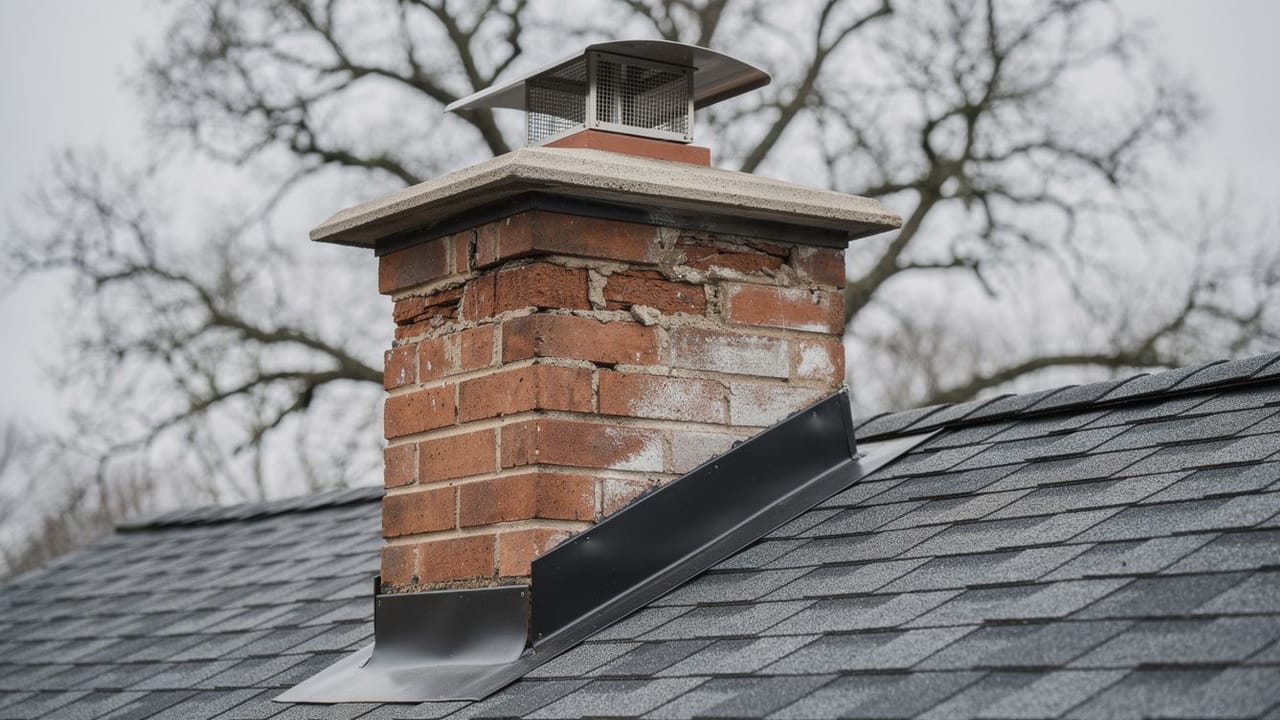
A chimney is exposed on four sides and on top, with no roof over it and nothing sheltering it. The National Park Service’s brief on repointing mortar joints notes that nearly every historic building has masonry somewhere, a chimney or foundation at the least, and that masonry, though thought of as permanent, deteriorates, especially at the mortar joints. On a chimney those joints take rain and sun from every direction, and when we look one over for chimney repair, these are the places we check.
The crown
The top of the chimney is where water lands first. What we want to find there is a concrete crown that slopes away from the flue and overhangs the brick with a drip edge, so rain falls clear of the face instead of running down it. What some older chimneys have instead is a thin skim of mortar troweled over the top course. Once either one cracks, water has a way into the top of the masonry, and that is the route the Park Service’s brief on controlling unwanted moisture describes when it traces weather getting into a building above ground to deteriorating materials, deferred maintenance and settlement cracks.
A skim that stops flush with the brick sends its runoff down the face of the top courses. When those joints need repointing, we hold to the rule in the repointing brief: new mortar has to be softer and more vapor permeable than the brick around it, which for the soft brick of an older chimney means a high-lime mix, not a hard one heavy in portland cement. Our post on why mortar fails before the brick covers what happens to old brick when that is ignored.
How should a chimney be flashed at the roof?
Where the chimney comes through the roof, we flash it in two layers: step flashing laid in with each course of shingles, and counter-flashing cut into a mortar joint above and lapped down over it. A bead of sealant run along that joint is the shortcut, and it keeps water out only for as long as it stays stuck to both the brick and the roof.
The Park Service’s brief on roofing says failure of the flashing system is usually a major cause of roof deterioration, and that flashing should be inspected for poor workmanship, thermal stress and deterioration of the metal and its fasteners. It adds that water coming through the roofing or flashing usually shows on the sheathing as a damp spot or stain, and that a look at the underside of the roof from the attic after a storm can give early warning. Rain is not all that gets through, either: UT Extension’s guide to nuisance animals around the home lists loose flashing around chimneys among the openings squirrels use to get into an attic.
- A crown sloped away from the flue, with an overhang and a drip edge
- Step flashing laid in with the shingle courses
- Counter-flashing cut into the mortar, not sealed over the face
- A ventilated cap over the flue, unless swifts nest there
- Repointing with mortar softer than the brick
Why does a chimney flue need a cap?
An uncapped flue is an open hole in the top of the house, and rain falls straight down it. One of the repairs listed in the moisture brief is to add ventilated chimney caps to unused chimneys that collect rain water. The same brief advises tying a damp symptom to what changed before treating it, and its example is efflorescence that appears on a chimney after a building stops being heated. If white deposits are showing up on yours, our post on efflorescence explains what they are telling you.
On a chimney that still serves a wood fire, a cap with a spark arrestor screen does a second job: the roofing brief says screens at the top of chimneys help keep flaming material from escaping, which cuts down on fires that start at the roof. Mesh keeps animals out as well, with one exception here. Chimney swifts, which TWRA says usually reach Tennessee by late March and are gone by mid-October, are protected by the Migratory Bird Treaty Act, and the U.S. Fish and Wildlife Service’s page on chimney swifts says harassing, injuring or killing them, their eggs or their nests is illegal. FWS asks that chimneys swifts use be left uncapped and that chimney and roof repairs wait until the birds are gone; to keep other animals off, it suggests cutting back branches that hang over the roof and fastening a metal flashing band, 2 feet wide, around the outside of the chimney near the top. On a swift chimney, we schedule the work at the top for the months they are away.
What does a leaning chimney mean?
A chimney pulling away from the wall, or visibly out of plumb, is a different problem from weathering at the top, and we treat it as a structural question until we know why it moved. That means looking at what the chimney stands on, which is foundation and structural work, before anyone talks about mortar.
A gap at the wall that has widened is worth an assessment rather than a caulk gun. The repointing brief warns against the masonry version of the same mistake: it calls it wrong to assume repointing alone will solve deficiencies that result from other problems, and it names differential settlement, along with leaking roofs and gutters, among the root causes to deal with before the work starts. If your chimney has moved, or its top needs any of the work above, ask us for an estimate.
Sources
- National Park Service, Preservation Brief 2: Repointing Mortar Joints in Historic Masonry Buildings (Mack and Speweik) — Nearly every historic building has masonry, at least a chimney or foundation; masonry deteriorates, especially at the mortar joints; new mortar softer and more vapor permeable than the brick, high-lime mortar for soft brick; repointing alone does not solve other problems; differential settlement and leaking roofs and gutters as root causes to correct first
- National Park Service, Preservation Brief 39: Holding the Line: Controlling Unwanted Moisture in Historic Buildings (Park) — Above-grade moisture through deteriorating materials, deferred maintenance and settlement cracks; add ventilated chimney caps to unused chimneys that collect rain water; efflorescence on a chimney after heating stops as a symptom tied to a change
- National Park Service, Preservation Brief 4: Roofing for Historic Buildings (Sweetser) — Flashing failure usually a major cause of roof deterioration; inspect for workmanship, thermal stress and metal deterioration; leaks show as a damp spot or stain; check the underside of the roof from the attic after a storm; spark arrestor screens keep flaming material from escaping
- Harper and Deck, UT Extension PB1624, Managing Nuisance Animals and Associated Damage around the Home (2012) — Loose flashing around chimneys among the openings squirrels use to get into a building or attic
- Tennessee Wildlife Resources Agency, Chimney Swift — Chimney swifts usually arrive in Tennessee by late March and depart by mid-October
- U.S. Fish and Wildlife Service, On the Wing with Chimney Swifts — Protected by the Migratory Bird Treaty Act; harassing, injuring or killing swifts, their eggs and nests is illegal; do not cap a swift chimney; inspections and repairs when swifts are absent; trim foliage and a 2-foot metal flashing band to keep nuisance animals out
FAQ
What Goes Wrong With a Brick Chimney — questions
Why does my chimney leak when it rains?
Failed flashing where the chimney passes through the roof is a common cause, particularly where the joint was sealed over with caulk instead of counter-flashed into the mortar. A cracked crown or mortar skim, an open flue with no cap, and eroded joints near the top are the other places we check. Looking at the underside of the roof from the attic after a storm can help narrow it down.
What is a chimney crown and does mine have one?
It is the concrete top of the chimney around the flue. The kind we build slopes away from the flue and overhangs the brick, with a drip edge underneath so water drops clear of the face. Some older chimneys have only a thin layer of mortar troweled over the top course instead. Binoculars from the yard will usually show you which you have and whether it is cracked.
Do I need a chimney cap if I never use the fireplace?
Usually, yes. An open flue takes in rain whether or not you light fires, and the National Park Service recommends ventilated caps on unused chimneys that collect rain water. The exception is a chimney used by chimney swifts, which are federally protected: the Fish and Wildlife Service asks that those chimneys stay uncapped, with any work done after the birds leave in the fall and before they return in late March.
How do I know if my chimney needs repair?
Look for a cracked crown or mortar skim, caulk along the roof line where counter-flashing should be, an open flue with no cap, eroded joints near the top, white deposits, or a gap opening between chimney and wall. From the attic after a storm, a damp spot or stain on the sheathing near the chimney is another early warning.